The following information is required before starting the course.
Teaching is based around the Six Divisions which simplifies and consolidates learning.
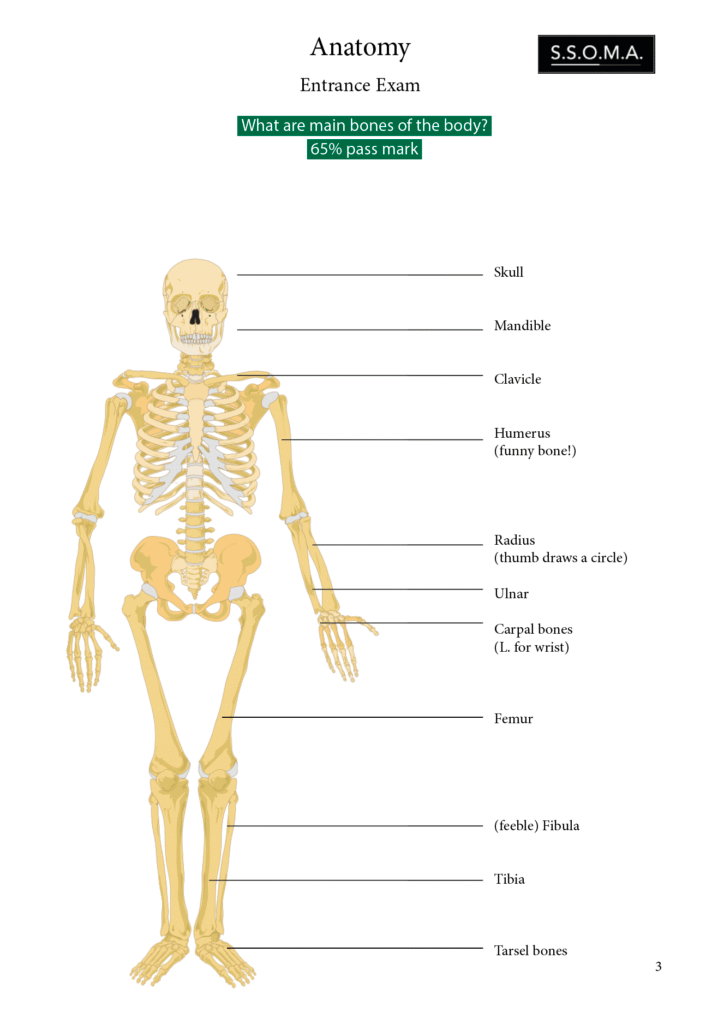
Bones are controlled by the kidneys (which are part of shaoyin). The major bones of the body are critical to being able to describe where you are in the body.
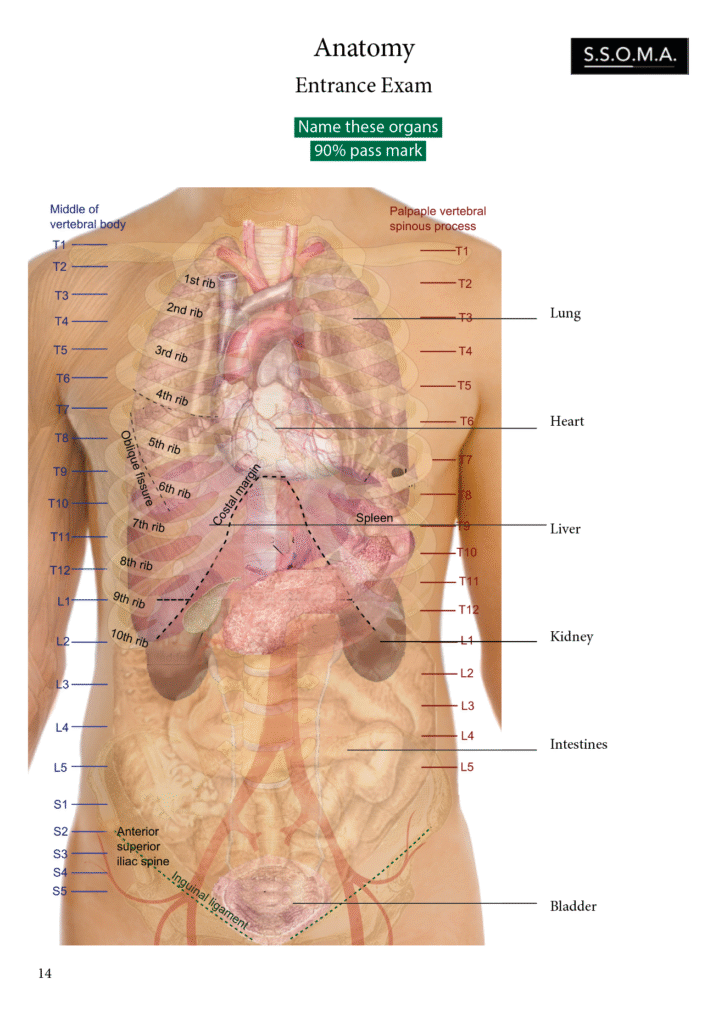
The organs are the exact same organs that chinese medicine talk about but, importantly, lie within the Six Divisions. These organs sit within the divisions in the same way that your oven sits within your kitchen: critical to its function but also within something bigger.
Students, obviously, need to understand roughly where these organs are found!
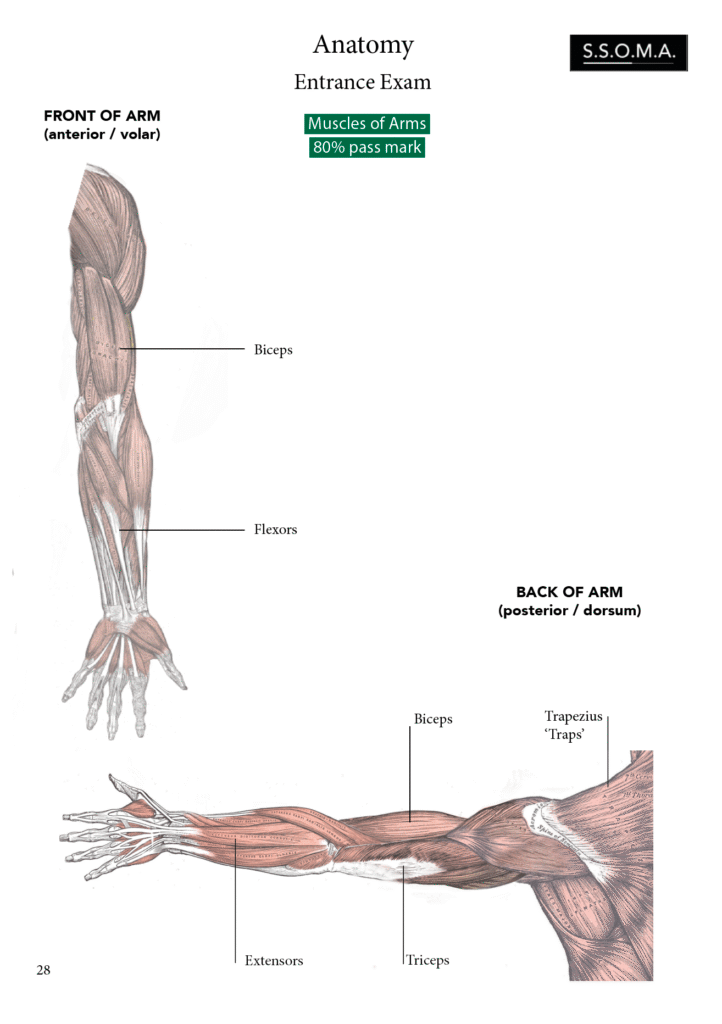
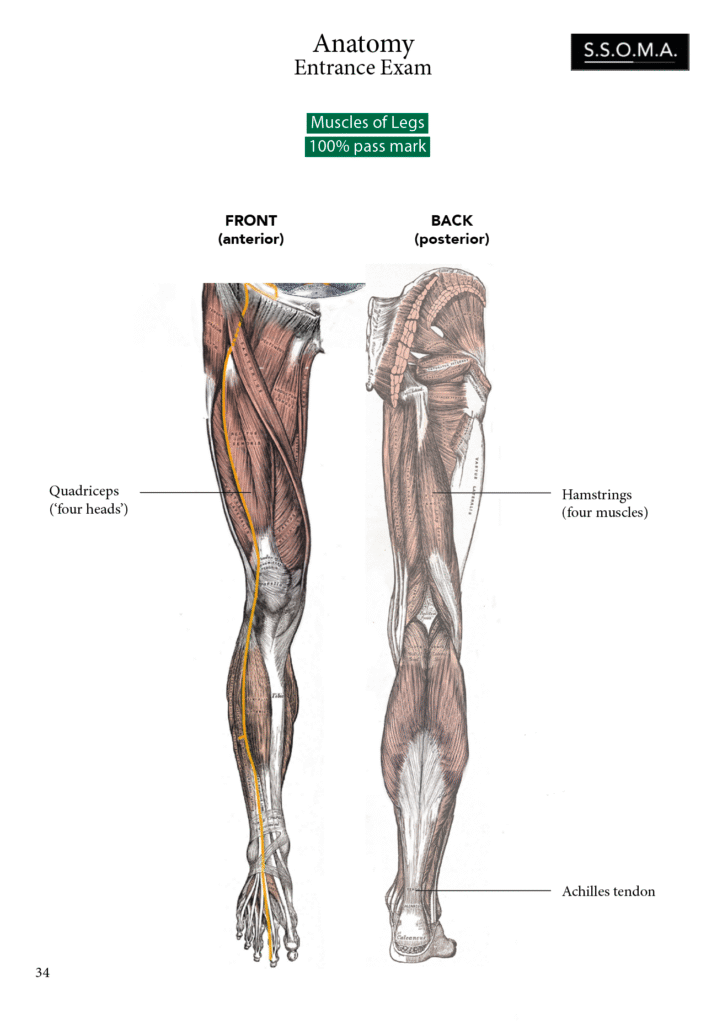
Muscles belong within the taiyin and yangming divisions, which correspond roughly to the digestive tract. The muscles of the limbs are very important in being able to find the points and students will be expected to have a good grasp of muscle anatomy by graduation. These muscles are the major ones.
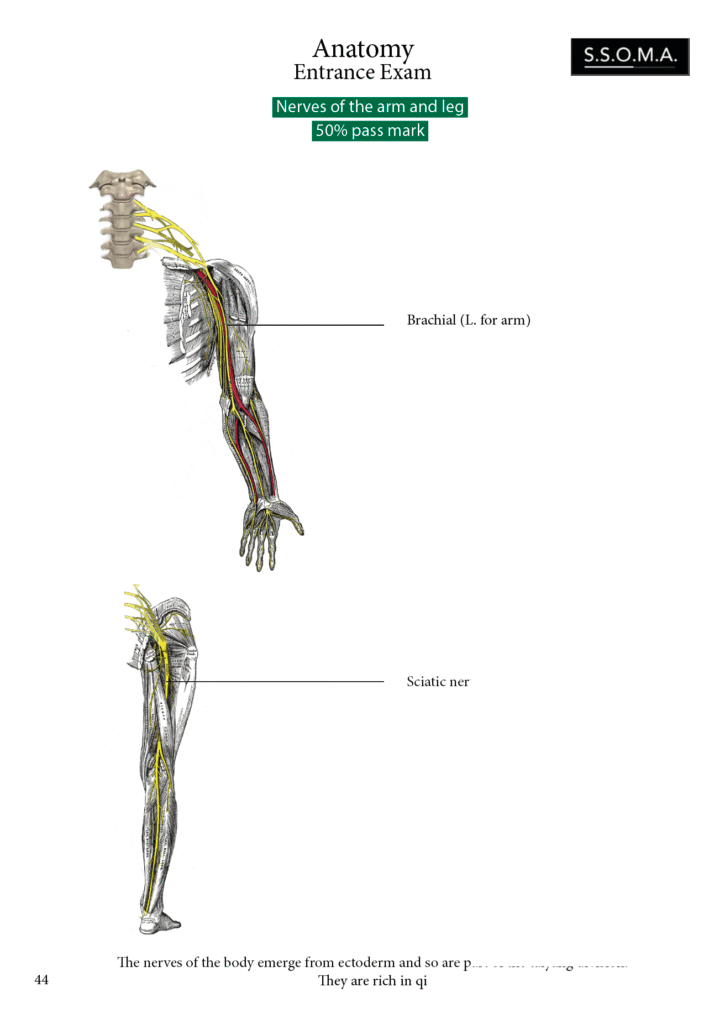
The nerves emerge from the ectoderm of the back and so are part of the taiyang. Most in the limbs are named after bones and so the names become easy to remember. These are two exceptions.
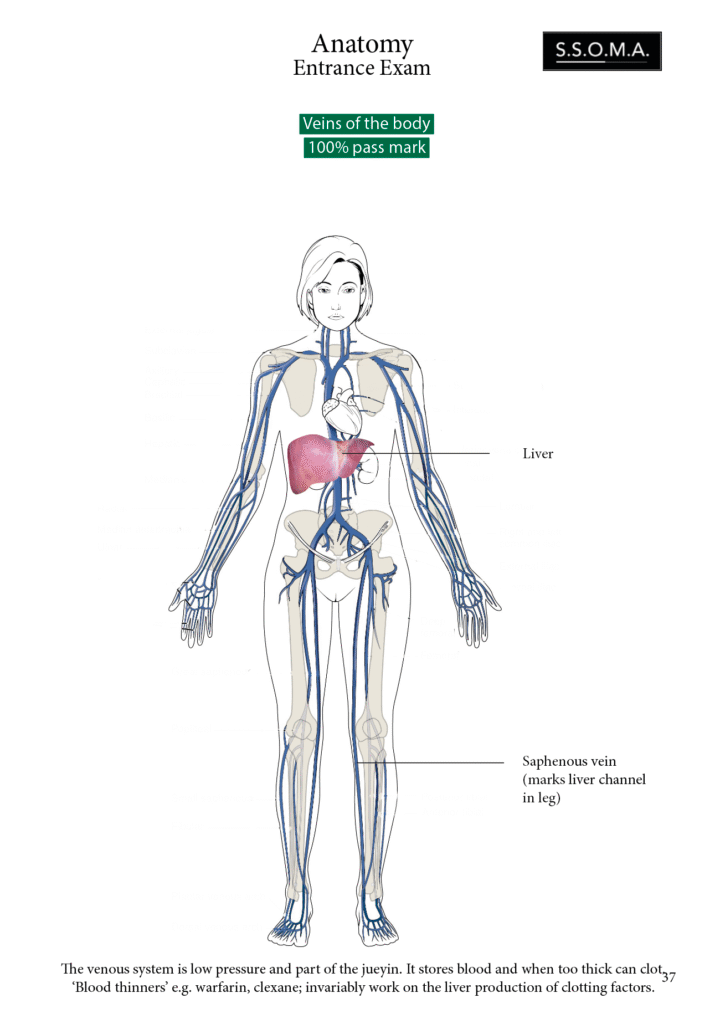
The liver is part of the jueyin division which stores blood in the venous system. The liver channel follows the great saphenous vein in the leg and so this vein must be known by students. Saphenous means ‘hidden’ in arabic and when it becomes visible then patients complain of ‘varicose veins’.
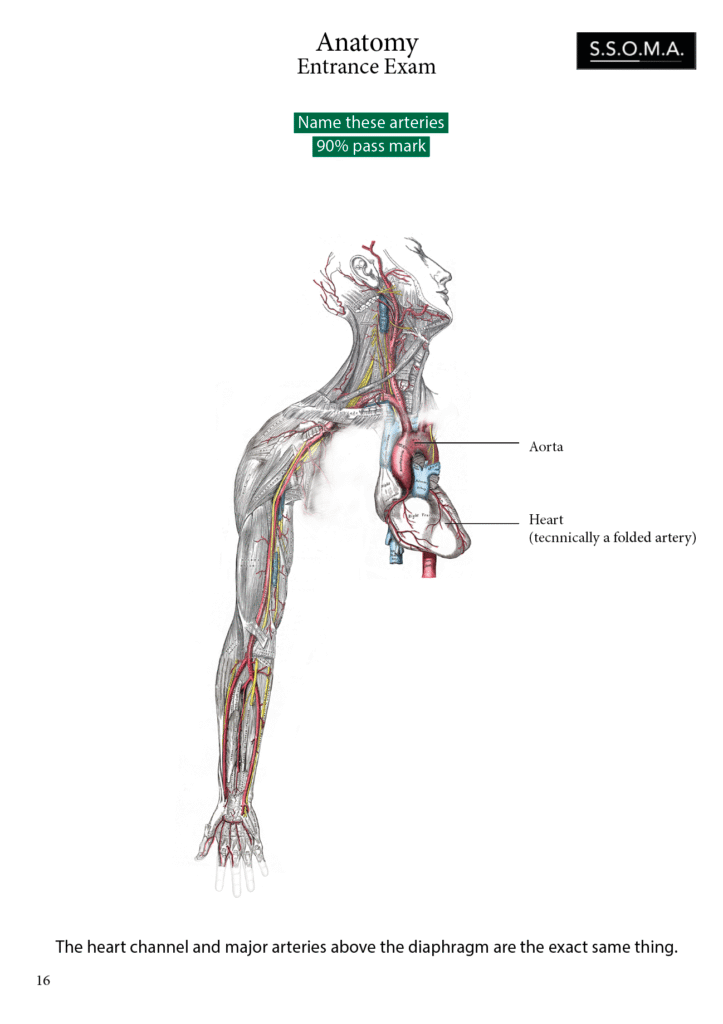
The heart channel is simply the arteries that leave the heart. As a result students, by graduation, will be expected to have a good understanding of the arterial system of the body. A single large artery leaves the left side of the heart to supply the body and is called the aorta. Aorta, in Greek, means to lift or suspend.